- The old order
The world remembered before the awakening of magical power.
- Awakening and upheaval
The transformation of power and the emergence of a different social order.
- The age of protection
The High Priestesses, their mandates and the inheritance honoured by Erutia.
- The city of feeling
Magical craft, civic ingenuity and the art of making experience visible.
Before the present order
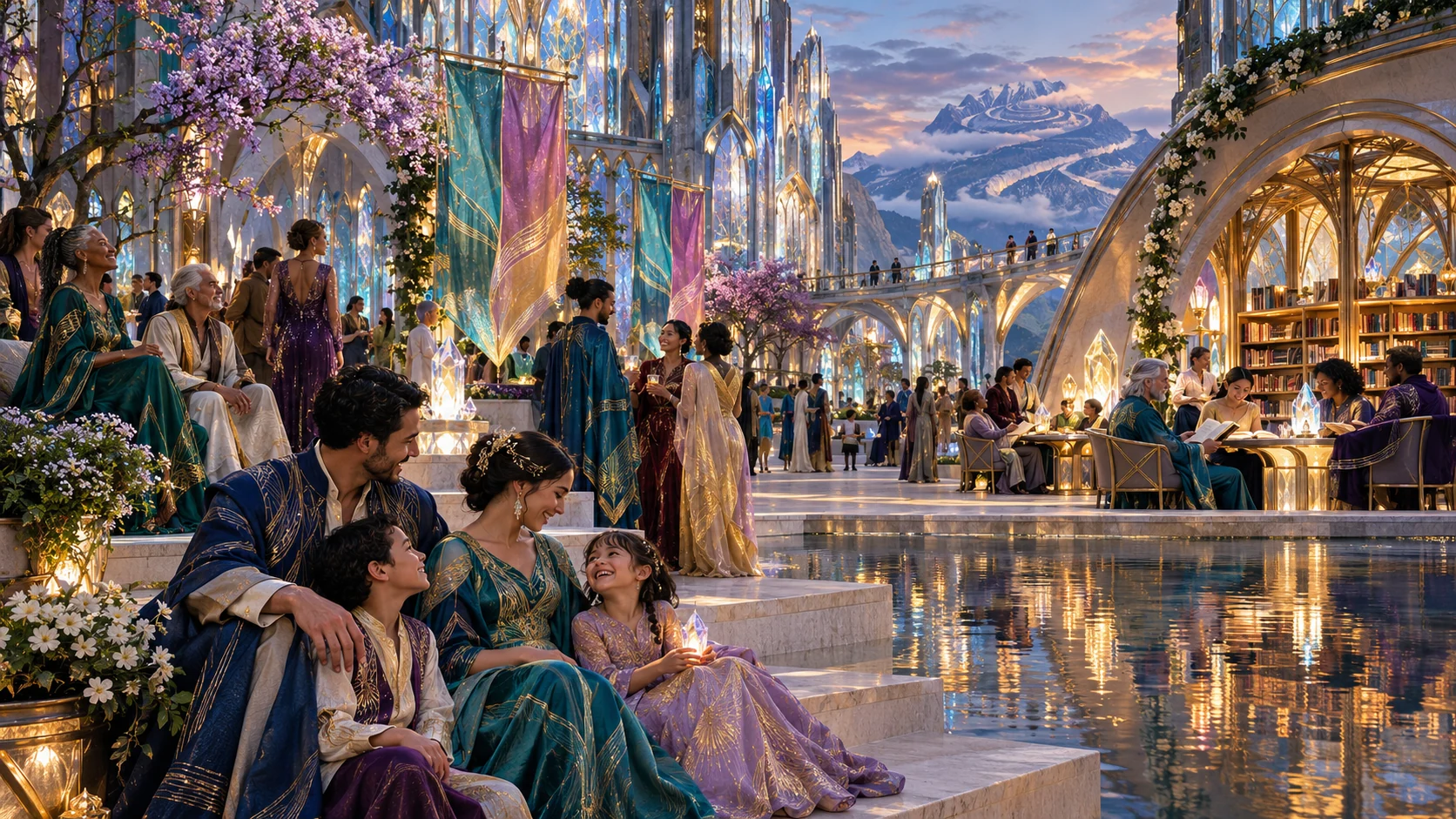
Erutia's historical account begins with the world from which the present order emerged. The museum invites visitors to consider the old distributions of authority, the upheaval surrounding the awakening of magical power and the changes that followed. Objects and commemorative works give these immense events a human scale.
This is the city's account of its inheritance. Visitors arriving with another kingdom's historical education may find the emphasis unfamiliar. Take time with the captions: what Erutia chooses to commemorate is part of what the galleries reveal.
Protection and doctrine
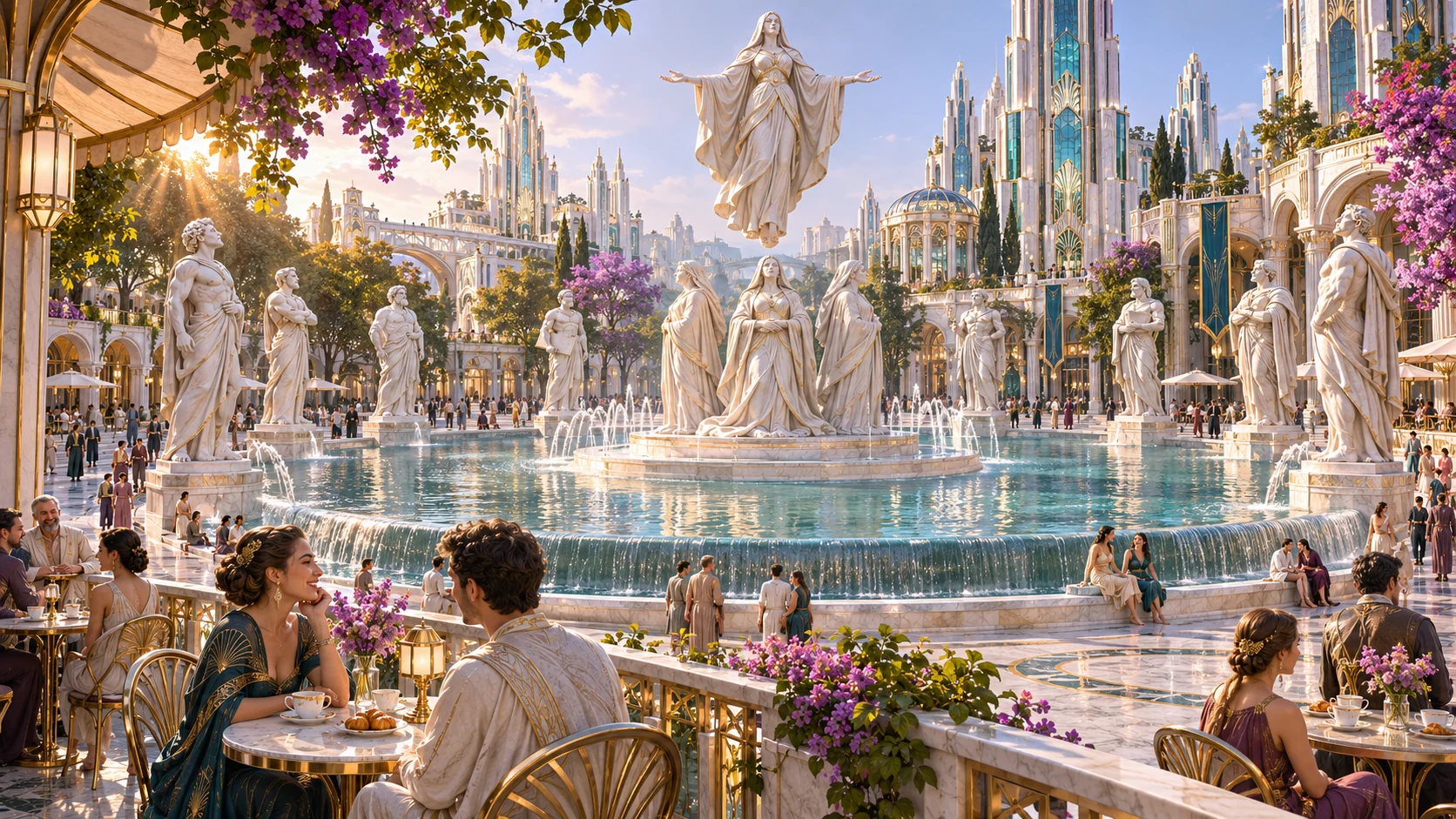
The High Priestesses occupy a central place in the public history. Their doctrines and mandates are presented as foundations of the order beneath which successive generations have lived. Ceremonial art, inherited forms of authority and monuments such as Under Her Grace carry that history into the streets.
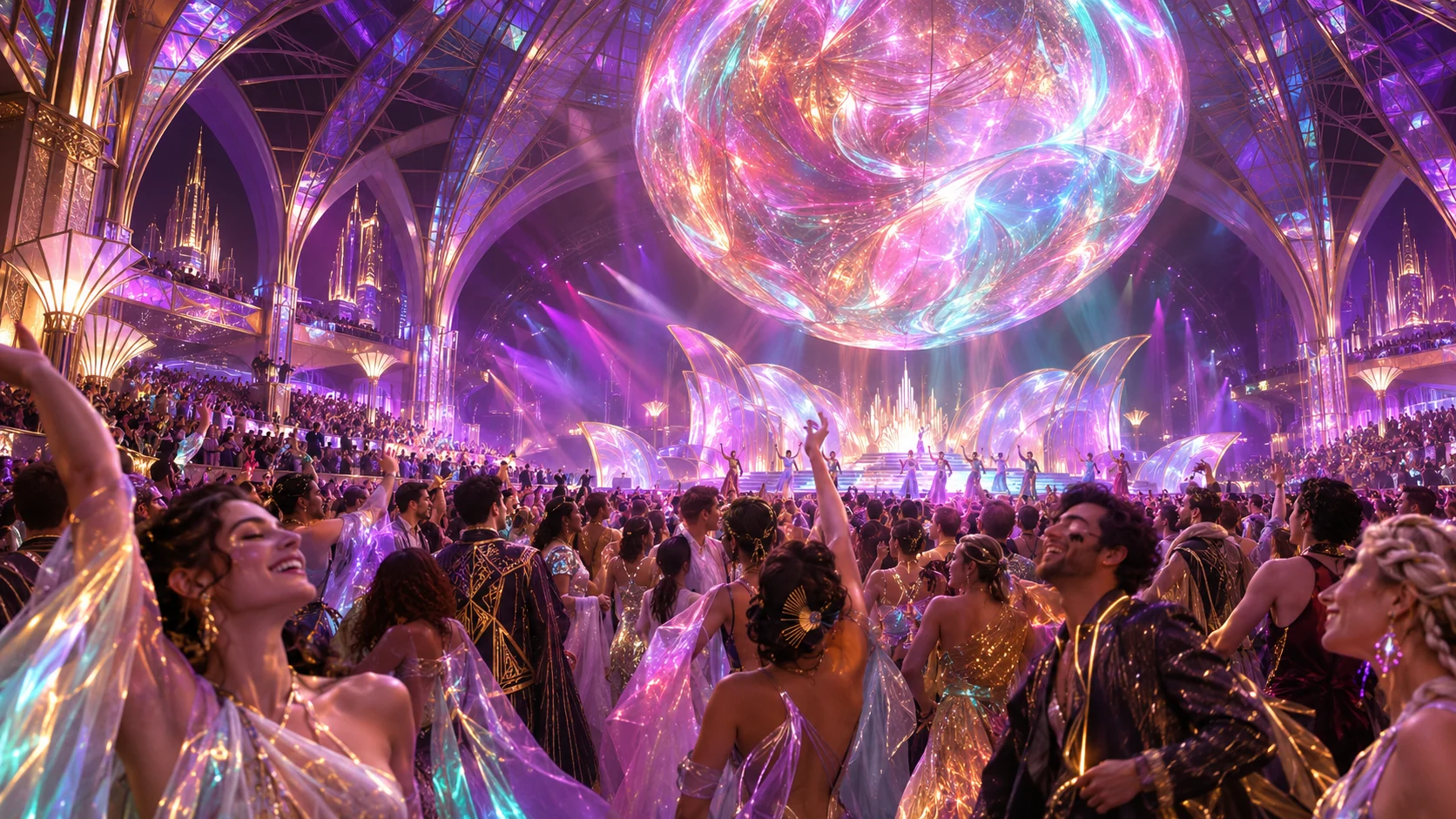
For visitors attending the Festival of the Shard, these galleries offer useful context. A phrase heard in a public reading or a familiar arrangement of figures may acquire a different resonance after an hour among the museum's historical displays.
Erutia makes the inheritance its own
The account continues into the growth of a city celebrated for magical craft, architecture and performance. Here, inherited authority shares the gallery with technical ingenuity. Erutia takes evident pride in the uses it has found for materials, light and the responses of an audience.
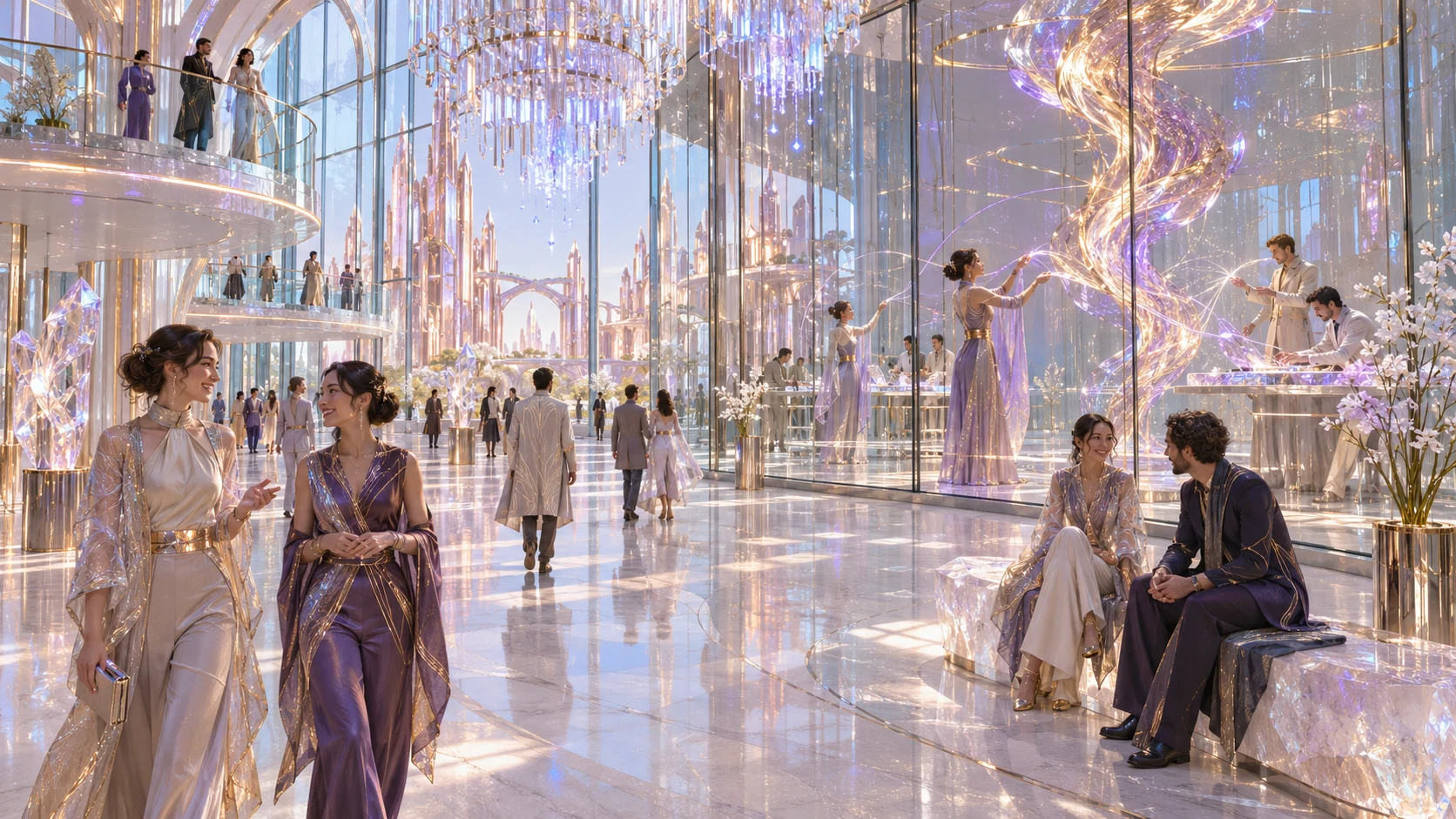
Beyond the historical sequence, the Eternal Vestibule opens onto floating sculpture, memory-glass and emotion paintings. In the Hall of Living Colour, an audience's feelings can alter what it sees. The distinction between looking at an exhibition and contributing to it becomes pleasantly difficult to maintain.
A museum still being made
Watch for Artisan Casters at work. An installation may begin as ribbons of light exchanged between hands before becoming something that appears to ignore the usual obligations of water, weight or space. The assistants, reservoirs and tools deserve a glance too: remarkable effects are supported by considerable practical work.
The galleries collect emotional residue for processing and use, including civic works. The museum regards this cycle as a contribution to the city; visiting cultures do not always share its interpretation. A guide can explain the public account. Whether the explanation settles your curiosity is another part of the visit.